
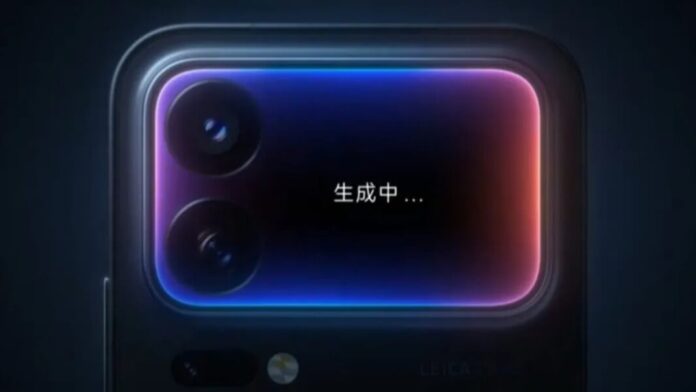
The Xiaomi 18 Pro is turning one unusual smartphone feature into something much more useful.
Xiaomi has revealed a new version of its rear display called the “Versatile Back Screen.” An official preview video shows the secondary display running small AI-generated apps for everyday tasks. Examples include a Pomodoro focus timer, a water intake tracker, an egg-cooking timer, an English vocabulary tool, and recipe recommendations.
That changes the rear display’s role.
On the Xiaomi 17 Pro, the extra screen already handled app cards, wallpapers, and other quick interactions. With the Xiaomi 18 Pro, Xiaomi appears to be pushing the idea further by using AI to create small tools for specific tasks.
And yes, there is now apparently a good reason to check the back of your phone before boiling an egg.
Table of Contents
Xiaomi 18 Pro Rear Display Gets AI-Powered Mini Apps
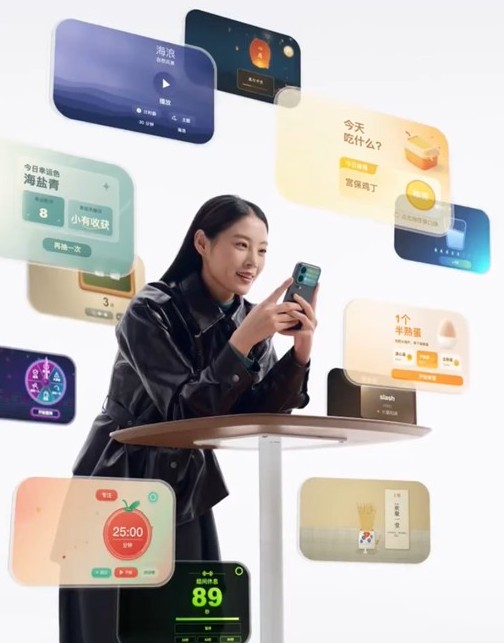
The biggest change is the shift from fixed functions to more flexible mini apps.
Xiaomi’s official Xiaomi 18 Pro trailer shows several tools designed for quick interactions. These include a Pomodoro timer for focused work, a water-drinking tracker, an egg timer, and an English vocabulary learning tool. The video also shows recipe recommendation cards.
These are simple tools by design.
You do not need a full smartphone interface to start a 10-minute timer or check a water intake goal. The rear screen can handle these small jobs without asking users to open a large app and navigate through several menus.
That is where the concept starts to make practical sense.
A secondary screen has limited space, so turning it into another full phone display would make little sense. Small, focused tools fit the hardware better.
What Can the Xiaomi 18 Pro Back Screen Do?
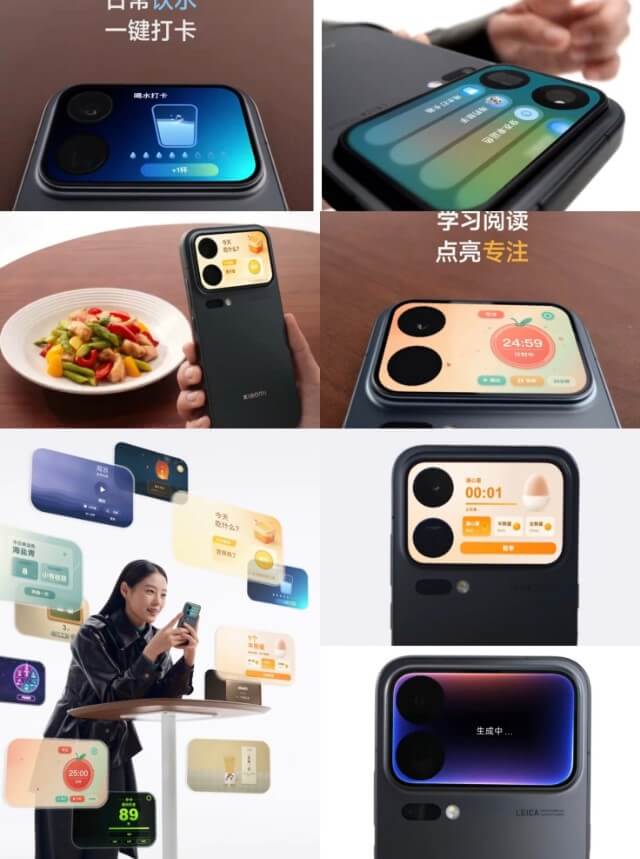
The Xiaomi 18 Pro official trailer gives us a useful look at the type of experiences Xiaomi is targeting.
Pomodoro Focus Timer
The Pomodoro tool is aimed at short work sessions. Users can start a focus timer directly from the rear screen instead of opening a productivity app on the main display.
It is a small feature, but that is exactly the point.
The rear screen does not need to replace the main display. It needs to make quick tasks easier.
Water Intake Tracker
Xiaomi also showed a water intake tool.
Users can use the rear display to keep track of their daily water intake. This turns the secondary screen into a simple tracker rather than just a display for notifications or wallpapers.
Egg-Cooking Timer
The egg timer may be the most amusing example, but it also explains the idea well.
You do not need a full app for something that takes a few minutes. A dedicated timer on a small screen can be easier to use while cooking.
It is the kind of feature that sounds silly until you actually need it.
English Vocabulary Tool
The Xiaomi 18 Pro trailer also shows an English vocabulary learning experience.
This suggests Xiaomi uses the rear display for small pieces of information users can check repeatedly throughout the day. It could make the screen useful during short idle moments without requiring a full learning app interface.
Recipe Recommendations
Xiaomi also shows recipe recommendation cards as another example.
The idea is simple. Users can get bite-sized recipe information through the rear display without keeping the larger main screen active.
These examples also show how different the new approach is from simply adding another clock or wallpaper collection.
Xiaomi Wants Third-Party Brands on the Rear Screen
Xiaomi is also bringing outside brands into its rear-screen ecosystem.
Lu Weibing shared that Xiaomi has gathered partners for rear-screen application cards, including Starbucks China and Meituan, along with several other companies and services.
This could give the Xiaomi 18 Pro more real-world use cases after launch.
The concept is particularly interesting because third-party services can create tools designed around short interactions. Xiaomi has already shown examples connected to everyday activities. At the same time, partner integrations could extend the idea into food, drinks, fitness, entertainment, and other areas.
However, Xiaomi has not yet published a complete list of functions, supported services, or regional availability.
That matters because a feature shown during a Chinese launch campaign doesn’t automatically mean every user will get the same experience in every country.
For now, the official material confirms the direction. The final ecosystem still needs more details.
Xiaomi Says Its Previous Rear Screen Was Used Millions of Times
Xiaomi has a clear reason for continuing with the rear display.
Lu Weibing said users of the previous generation interacted with rear-screen app cards more than 4 million times per day. Xiaomi also said users added more than 3.5 million wallpapers per day to the rear display.
These are Xiaomi’s own figures, so treat them as company-reported usage data rather than independent measurements.
Still, the numbers explain Xiaomi’s decision to keep investing in the idea.
Lu Weibing said user needs around the rear screen are diverse and indicated that Xiaomi is using a more advanced approach for the new generation.
The strategy appears straightforward: give users more ways to use the small screen.
The Rear Display Is More Than a Wallpaper Screen
The Xiaomi 17 Pro already used its rear display for more than personalization.
The previous-generation system included app cards and other quick interactions, and Xiaomi continued expanding the feature through software updates. Reports from the 17 Pro generation also described the screen as part of the phone’s wider quick-access experience.
The Xiaomi 18 Pro takes that idea in a different direction.
Instead of asking developers to build only traditional apps for a small display, Xiaomi is showing AI-generated mini experiences designed around individual tasks.
That could make the screen more adaptable.
Need a timer? Use a timer.
Need a simple tracker? Use a tracker.
Want a quick recommendation? Get a small card.
The important question is whether users will actually use these tools regularly. A rear display only becomes useful when it solves real problems. More features alone do not guarantee that.
Xiaomi 18 Pro and 18 Pro Max Design Gets Another Look
The new teasers also provide another look at the phone’s rear design.
The display sits inside the large camera area, alongside the Leica-branded camera system. Recent coverage of Xiaomi’s official teaser confirms the rear display remains part of the Xiaomi 18 Pro series design.
Some reports have also pointed to design changes around the camera module and other hardware details.
However, many of those details remain based on leaks rather than Xiaomi’s official specification sheet. It is better to separate those reports from features the company has actually confirmed.
At this stage, the rear display and its new AI-focused direction have much stronger evidence because Xiaomi has shown the feature directly.
Xiaomi 18 Pro: Will Every AI Mini App Be Available Everywhere?
This is still unclear.
Xiaomi has shown several rear-screen experiences in its official promotional material. Still, the company has not yet provided a complete breakdown of which mini apps will be included on each model or which markets will receive them.
Third-party features could also vary by country.
That is common with connected services because apps, partners, and regional services can differ between markets.
For now, buyers should treat the Xiaomi 18 Pro trailer as a preview of what Xiaomi is building, not a final list of every feature that will appear on every Xiaomi 18 Pro phone.
The same applies to the AI generation process itself.
Xiaomi has shown AI-generated applications, but the company has not fully explained how much of that process happens directly on the device, how much depends on cloud services, or what limits will apply.
Those details will become important once the phones launch.
Xiaomi 18 Pro Launch Is Set for China This Month
Xiaomi has officially confirmed that the Xiaomi 18 Pro series will launch in China during September 2026. Lu Weibing announced the month and described the new generation as a major upgrade across performance, imaging, battery life, and AI capabilities.
The company has not yet provided the full specification sheet in the material currently available.
A Geekbench listing reported on September 16 also points to a Xiaomi 18 Pro with 16GB of RAM and Qualcomm’s upcoming flagship platform. However, those details come from the benchmark listing, not Xiaomi’s official specification announcement.
Keep that distinction in mind as more leaks emerge.
Xiaomi 18 Pro Rear Screen: What Makes It Interesting?
The most interesting part of the Xiaomi 18 Pro is not simply that it has another display.
It is how Xiaomi is trying to use it.
A small rear panel has an obvious limitation. It cannot replace the main screen for normal smartphone tasks. Xiaomi seems to be working around that limitation by focusing on compact tools that need little screen space.
That makes the Pomodoro timer, water tracker, and egg timer more logical than trying to run a giant social media interface on the back.
The AI element could make this even more flexible.
Rather than treating the rear display as one fixed feature, Xiaomi appears to be building it as a place for small, task-specific experiences.
Whether that becomes genuinely useful will depend on how fast Xiaomi expands the system, how well third-party services support it, and how much freedom users actually get to create and save their own mini apps.
Final Thoughts
The Xiaomi 18 Pro’s rear display is becoming one of the phone’s clearest differentiators.
The Xiaomi 18 Pro official trailer confirms that Xiaomi is moving beyond wallpapers and simple shortcuts with AI-generated mini apps. The company has shown a Pomodoro timer, water tracker, egg timer, English vocabulary tool, and recipe recommendations, while also promoting partnerships with services such as Starbucks China and Meituan.
Xiaomi’s reported usage figures for the previous generation also show why the company is continuing to develop the concept. It says rear-screen app cards were used more than 4 million times per day, while more than 3.5 million wallpapers were added daily.
Questions remain about regional support, the full app library, and how the AI system works.
Those details will matter just as much as the hardware.
For now, the Xiaomi 18 Pro rear display is shaping up to be more than a fancy second screen. Xiaomi is trying to turn it into a compact tool panel that changes based on what the user needs.
And honestly, a phone that can help you focus, remind you to drink water, and tell you when your egg is ready has at least understood one thing: sometimes the smallest features are the ones you actually use.