

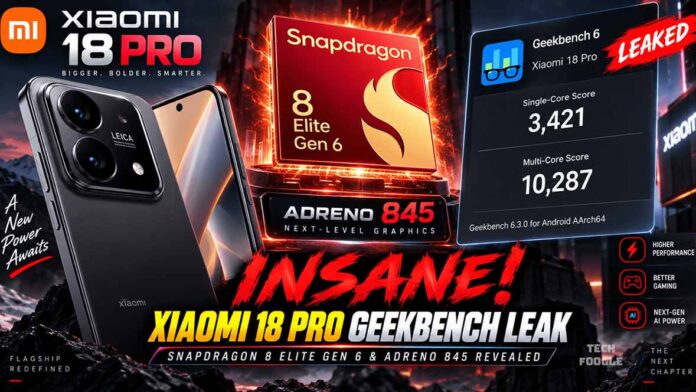
The Xiaomi 18 Pro has appeared on Geekbench, giving us one of the clearest early looks yet at Qualcomm’s next flagship mobile platform. The listing reveals the phone’s reported processor, CPU layout, clock speeds, memory figure, Android version, and benchmark scores.
The result is interesting for another reason. The listing points to the standard Snapdragon 8 Elite Gen 6. At the same time, recent leaks have placed a higher-tier Extreme version above it. That could mean Qualcomm is preparing a clearer split between its standard and premium flagship chips.
One important catch: neither the Xiaomi 18 Pro nor the Snapdragon 8 Elite Gen 6 has had a full official launch yet. These are pre-release benchmark results, so the final hardware and performance may change.
Here is what the latest Geekbench data actually tells us.
Table of Contents
Xiaomi 18 Pro Appears on Geekbench 7
A Xiaomi smartphone carrying the model number M610BB has appeared in the Geekbench database. The entry was uploaded on September 16, 2026, and identifies the device as running Geekbench 7 on Android 17. The CPU is listed as QTI SM8950. Notebookcheck links this hardware to the upcoming Xiaomi 18 Pro and reports that SM8950 is the identifier associated with the standard Snapdragon 8 Elite Gen 6.
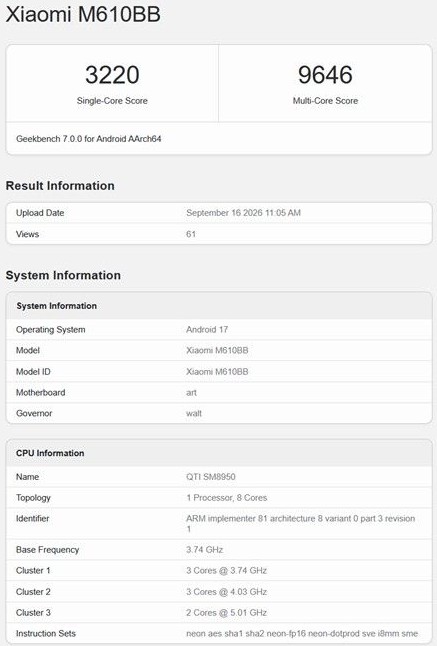
The benchmark score is 3,220 points in single-core and 9,646 points in multi-core.
Those numbers are worth watching because the platform is still an unreleased. Geekbench results from engineering samples can move around as manufacturers adjust firmware, thermal limits, drivers, and system software.
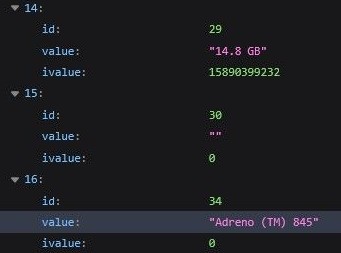
Geekbench itself lists the phone with a 3+3+2 CPU layout. Three cores run at 3.74GHz, another three reach 4.03GHz, and two prime cores can reach 5.01GHz. The listing also reports 14.80GB of memory, consistent with a phone marketed with 16GB of physical RAM after the system reserves some.
That 5.01GHz figure is probably the most eye-catching part of the listing. Five gigahertz on a smartphone processor certainly looks wild on paper. Still, peak clock speed alone does not tell us how long the chip can sustain that level during gaming or heavy workloads.
Snapdragon 8 Elite Gen 6 Is Still Unofficial
The Geekbench entry identifies the silicon as SM8950. Still, Qualcomm has not yet published the complete retail specifications under the Snapdragon 8 Elite Gen 6 name.
Current reporting links SM8950 to the standard Snapdragon 8 Elite Gen 6. Meanwhile, SM8975 has been linked to a higher-tier Snapdragon 8 Elite Extreme Gen 6. The expected family is based on Qualcomm’s latest Oryon CPU design, with both variants reportedly using a three-cluster, eight-core arrangement.
Qualcomm has confirmed that its Snapdragon Summit 2026 will take place in Maui from September 22 to September 24. Still, the company’s official event page has not yet published the full specifications of these unreleased mobile platforms.
That timing matters.
The Xiaomi 18 Pro Geekbench leak has appeared just days before the event, giving us an early look at hardware that Qualcomm is expected to discuss soon. Until Qualcomm makes the announcement, treat names, specifications, and some technical details as reported, not final.
Xiaomi 18 Pro Geekbench Scores: 3,220 and 9,646
The Xiaomi 18 Pro recorded a 3,220 single-core score and 9,646 multi-core score in Geekbench 7. These are the actual numbers shown on the Geekbench result page, so there is no need to spice them up with mystery math. The benchmark database lists the result as Geekbench 7.0.0 for Android AArch64.
The single-core number reflects performance from a single CPU core during Geekbench’s mixed workload tests. Multi-core testing uses more cores at the same time.
That distinction matters when comparing flagship phones.
Single-core performance can affect tasks such as app launches and many everyday operations. Multi-core scores matter more when workloads can use several CPU cores together, including certain encoding, compression, and creative workloads.
The Xiaomi 18 Pro’s early results are a useful starting point. They are not a complete performance review.
A benchmark can tell us what happened during one test. It cannot tell us how the phone will behave after 30 minutes of gaming, while charging, or under a heavy background workload.
The CPU Clock Speeds Are Especially Interesting
According to the Geekbench listing, the CPU uses three groups.
The first three cores are listed at 3.74GHz. Another three are listed at 4.03GHz. The final two prime cores can reach 5.01GHz.
Notebookcheck reports that this CPU configuration and clock structure match the higher-tier Snapdragon 8 Elite Extreme Gen 6 hardware that has appeared in previous leaks.
If that information holds through Qualcomm’s official announcement, the difference between the standard and higher-tier chips could come mainly from the graphics side rather than a completely different CPU design.
That would be an interesting strategy.
Instead of simply giving the premium chip faster CPU cores, Qualcomm could create a wider separation through the GPU, memory support, and other platform features.
Of course, that is still based on pre-launch information.
Adreno 845 Is the Big GPU Clue
The Geekbench-linked hardware report identifies the standard SM8950 platform with an Adreno 845 GPU. Current reporting also links the standard Snapdragon 8 Elite Gen 6 to the Adreno 845. Meanwhile, the higher-tier SM8975 is expected to use an Adreno 850.
This could become one of the most important differences between the two Snapdragon variants.
A recent Geekbench result for the SM8975 platform recorded 26,210 points in OpenCL and 29,934 points in Vulkan, alongside a 3,582 single-core score and a 12,247 multi-core score.
However, there is an important correction here.
That earlier result was initially linked to the Xiaomi 18 Pro Max. Still, Notebookcheck later updated its report and said the model name had been spoofed. The hardware was actually a Qualcomm reference device used for silicon validation.
So treat those Adreno 850 numbers as evidence about the Snapdragon platform itself, not proof of Xiaomi 18 Pro Max retail performance.
That distinction is easy to miss and worth keeping clear.
How Far Behind Is the Standard Chip?
Based on the reported Geekbench 7 results, the standard Xiaomi 18 Pro score of 3,220 is about 10% lower than the SM8975 reference platform’s 3,582 single-core score.
The multi-core difference is much larger. A score of 9,646 is roughly 21% below the reference platform’s 12,247 result.
But this comparison needs context.
The devices are different. One is a Xiaomi pre-release phone, while the 12,247-point result came from a Qualcomm reference system. Different thermal designs, software builds, and power settings can affect benchmark results.
It would be risky to turn those percentages into a direct prediction for final Xiaomi 18 Pro performance.
The safer conclusion is that the early data shows a noticeable gap between the two platforms, while the size of that gap still needs more testing.
16GB RAM and Android 17 Listed
The Geekbench entry reports 14.80GB of memory and Android 17.
That memory figure does not mean Xiaomi will advertise the phone as having 14.8GB RAM. Benchmark software often reports the amount available to the system rather than the exact retail memory capacity.
Notebookcheck interprets the result as a 16GB RAM configuration, which is a reasonable reading because part of the installed memory is reserved for system functions.
Android 17 is also significant because it confirms that Xiaomi is testing the phone on Google’s next Android generation rather than an older platform.
The Geekbench page does not, however, confirm Xiaomi’s final software branding or commercial configuration. So treat claims about a specific HyperOS version separately from what the benchmark actually lists.
Xiaomi 18 Pro Launch Is Coming Soon
Xiaomi has officially confirmed that the Xiaomi 18 Pro series will launch in China during September 2026. The company has also teased an updated rear display for the Pro models.
A recent hands-on video from Xiaomi’s CEO Lu Weibing also revealed more details about the phone’s camera hardware and its expanded rear-screen functions. Notebookcheck reports that the Pro model will use a 200MP main camera and a 3.2x telephoto camera, while Xiaomi is adding more mini-app functions to the secondary display.
The Snapdragon side of the story is arriving at almost the same time.
Qualcomm’s Snapdragon Summit begins on September 22, only a few days after the Geekbench result appeared. The company’s official event page confirms the September 22–24 schedule.
That makes the next few days particularly important for the Snapdragon 8 Elite Gen 6 story.
What This Geekbench Leak Really Tells Us
The latest Xiaomi 18 Pro Geekbench listing gives us several concrete data points:
The device is listed as Xiaomi M610BB.
It scored 3,220 single-core and 9,646 multi-core in Geekbench 7.
The CPU uses a reported 3+3+2 configuration, with clocks reaching 5.01GHz.
The processor is identified as QTI SM8950.
The phone is running Android 17.
The system reports 14.80GB of memory, which points toward a 16GB configuration.
Current reports link the hardware to the standard Snapdragon 8 Elite Gen 6 and Adreno 845.
We still don’t have the final retail spec sheet from Qualcomm or Xiaomi.
And that matters.
A Geekbench leak is a snapshot. It is useful, but it is not the finish line.
Final Thoughts
The Xiaomi 18 Pro Geekbench leak gives the Snapdragon 8 Elite Gen 6 a very interesting starting point. The 3,220 single-core and 9,646 multi-core results, combined with a reported 5.01GHz peak CPU clock and Adreno 845 graphics, make this one of the most detailed early looks at the standard Snapdragon platform so far.
The bigger question is how Qualcomm separates the standard and Extreme versions. Early information suggests the CPU setups may be closely related, while the GPU could be the bigger difference.
We should have much better answers when Qualcomm opens Snapdragon Summit on September 22.
For now, the Xiaomi 18 Pro result is best viewed as an early hardware clue rather than a final performance verdict. The numbers are real. The retail product is still coming.