
Qualcomm appears to be preparing another bold step in its chip lineup with the rumored Snapdragon 8 Elite Gen 6. Reports suggest that the company will bring both a Standard Snapdragon 8 Elite Gen 6 and a Pro Snapdragon 8 Elite Gen 6 version of this next-generation processor. This move could reshape how Qualcomm defines its flagship mobile platforms.
Despite Qualcomm’s previous attempt to simplify its naming system with the Snapdragon 8 Elite Gen 5, the upcoming release might mark a return to more complex branding. According to reliable industry insider Digital Chat Station (DCS), the Snapdragon 8 Elite Gen 6 is expected to arrive as Qualcomm’s first 2nm chipset, manufactured using TSMC’s advanced N2P node. This shift not only highlights Qualcomm’s commitment to performance gains but also signals its intent to challenge Apple’s dominance in the premium chip segment.
Table of Contents
Snapdragon 8 Elite Gen 6: Two Variants, Two Different Philosophies
The biggest takeaway from these early leaks is the introduction of two distinct versions: the Snapdragon 8 Elite Gen 6 Standard and the Snapdragon 8 Elite Gen 6 Pro. While both are said to use the same 2nm process, they may differ significantly in how their CPUs are designed.
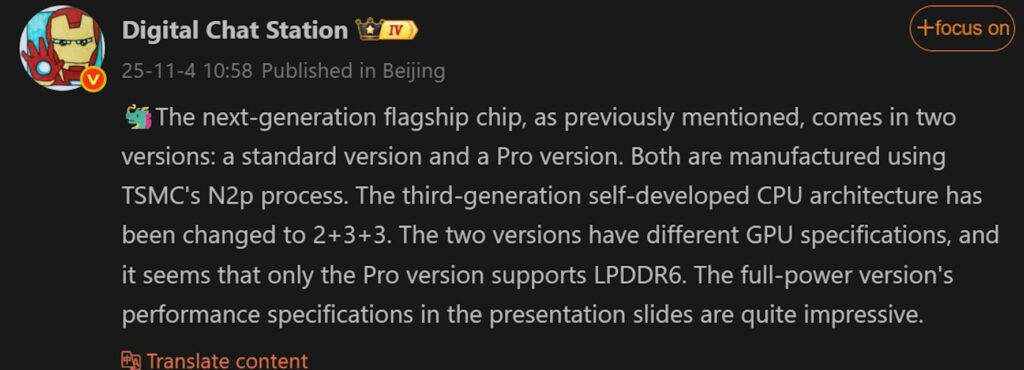
The standard model is rumored to feature an unusual 2 + 3 + 3 CPU cluster configuration. This layout breaks away from the typical dual-cluster design seen in the Snapdragon 8 Gen 5 series, which used a 2 + 6 setup for balanced performance and power efficiency. The triple-split setup might allow for better task distribution, but it could also introduce complexity in optimization, potentially affecting sustained performance.
On the other hand, the Snapdragon 8 Elite Gen 6 Pro variant is expected to stick with a dual-split CPU structure, favoring a more traditional and performance-oriented design. This could make the Pro version a better choice for users who prioritize raw power and consistent thermal control.
GPU and Memory Differences
When it comes to graphics, both variants will continue Qualcomm’s tradition of strong GPU performance. The Standard edition will likely carry forward the Adreno 840 GPU series, while the Pro model could debut a new Adreno 850 GPU, built to deliver higher rendering speeds and improved energy efficiency.
Memory support will also separate the two chips. The Pro variant is expected to be the first Qualcomm processor to support LPDDR6 RAM, offering faster data transfer and improved multitasking capabilities. The standard model, meanwhile, is said to remain compatible with LPDDR5 memory, which is still highly capable but slightly behind in raw speed.
Qualcomm’s Branding Challenge
The potential reintroduction of a “Pro” label adds an interesting twist to Qualcomm’s branding strategy. When Don McGuire, Qualcomm’s Chief Marketing Officer, announced the “Elite” name for the Gen 5 series, the goal was to simplify the company’s product tiers. Bringing back a Pro suffix may once again blur that clarity.
This decision could lead to one of two outcomes. Qualcomm might choose to completely replace its older naming convention and focus solely on the Snapdragon 8 Elite Gen 6 and 8 Elite Gen 6 Pro, creating a clean two-model structure. Alternatively, it could keep both “Snapdragon 8 Gen 6” and “8 Elite Gen 6” families, introducing a third tier that complicates things once again.
If Qualcomm takes the latter route, consumers could face another round of confusion about what truly defines “Elite” performance.
Looking Ahead to 2026
While none of this has been officially confirmed, the early information paints an exciting picture of what to expect from Qualcomm in 2026. The company appears ready to push deeper into 2nm technology, introduce new CPU layouts, and expand its product segmentation to reach a wider range of premium devices.
In the end, whether Qualcomm’s approach results in better performance or just more complicated branding, the Snapdragon 8 Elite Gen 6 lineup could become a defining moment for the company. If these leaks prove accurate, 2026 might be a year where Qualcomm once again walks the line between innovation and confusion—delivering impressive technology while keeping everyone guessing about what comes next.