


Samsung appears to be quietly sharpening its defensive arsenal once again. With the potential activation of Memory Tagging Extension (MTE), users may soon gain access to a far more vigilant layer of protection that scrutinizes how memory is handled at a granular level. In essence, this mechanism could obstruct rogue memory access and shut down suspicious RAM behavior before it mutates into something dangerous.
Security has long been Samsung’s stronghold, largely anchored by its Knox framework. This hardware-rooted shield operates like an unseen sentry between sensitive data and external threats. Now, with One UI 9 looming on the horizon, Galaxy devices might evolve into something even more resilient, courtesy of ARM’s MTE integration.
Table of Contents
A Subtle Yet Significant Shift with One UI 9
Fresh insights from Android Authority suggest that upcoming Galaxy smartphones could adopt ARM’s Memory Tagging Extension via the One UI 9 update, which is expected to run on Android 17. The discovery stems from code fragments uncovered in Samsung’s Auto Blocker application that quietly point to this capability.
To rewind briefly, ARM originally introduced MTE back in 2018 alongside its 8.5-A architecture. Its raison d’être is deceptively simple yet profoundly impactful: detect memory inconsistencies, flag anomalies, and neutralize leaks that often become gateways for RAM exploitation.
Once enabled, MTE functions like a meticulous auditor. It ensures that applications, background services, and system processes interact with memory in a disciplined manner, neither overstepping their boundaries nor consuming resources recklessly. This introduces a form of real-time accountability within the system’s memory ecosystem.
New Controls, Greater Precision
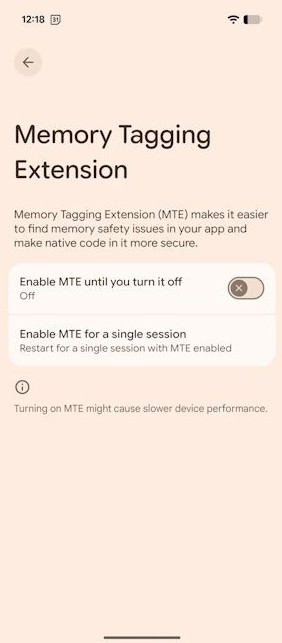
With One UI 9, users may encounter a dedicated MTE control panel. Here, a persistent toggle labeled “Enable MTE until you turn it off” is expected to appear, enabling continuous memory tagging enforcement. For those who prefer temporary activation, another option—“Enable MTE for a single session”—would keep the feature active only until the device reboots.
This dual-mode approach offers flexibility rather than rigidity, allowing users to balance security and performance based on their immediate needs.
Stability Gains, But Not Without Compromise
The upside is compelling. MTE could refine how RAM is distributed and utilized, leading to fewer system hiccups, reduced application crashes, and an overall smoother operational rhythm. In practical terms, your phone might feel less erratic and more composed under pressure.
However, this sophistication doesn’t come without a price. One of the unearthed code strings bluntly acknowledges a potential drawback: performance may suffer. This tradeoff isn’t surprising. By policing memory usage more aggressively, MTE inevitably limits the kind of unrestricted RAM access that high-performance scenarios often rely on.
In other words, you gain discipline and safety, but possibly at the expense of raw speed.
Availability Remains a Question, Mark
What remains uncertain is Samsung’s rollout strategy. Will MTE become a standard feature across all Galaxy devices running One UI 9, or will it remain a premium feature reserved for flagship-tier hardware, such as the Galaxy S series?
Given that MTE demands additional processing overhead, there’s a strong possibility it will favor more powerful chipsets capable of handling its intensity without noticeable degradation.
For now, the feature sits in a speculative phase. With only early test builds of One UI 9 circulating, clearer answers are likely to emerge in the coming months as Samsung refines both functionality and device compatibility.
If this unfolds as expected, Samsung won’t just be tightening security. It will redefine how smartphones govern their internal behavior, shifting from passive defense to active, continuous oversight.