

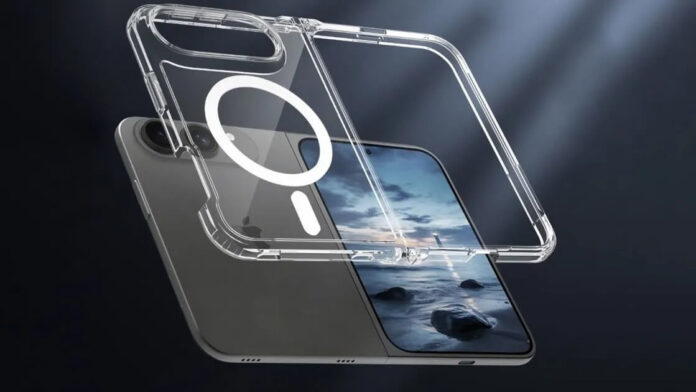
Apple rarely loses control of a product narrative this early. That is why the latest Apple iPhone Fold Case Design Leaks matter more than most accessory rumors. These renders do not hint at minor refinements. They point toward a completely different iPhone philosophy.
The leaked cases reveal a wider foldable format, a redesigned camera system, and a layout that breaks several long-standing Apple design patterns. If the dimensions prove accurate, Apple is preparing a foldable device that looks closer to a digital passport than a traditional smartphone.
For tech enthusiasts, this leak offers the clearest preview yet of Apple’s foldable ambitions.
Table of Contents
Apple’s Foldable Strategy Looks Different From Samsung’s
Most foldable phones chase thinness first. Apple appears focused on usability.
The Apple iPhone Fold Case Design Leaks suggest a wider external footprint instead of the tall, narrow designs popularized by Samsung’s Galaxy Fold lineup. This wider shape changes how users interact with the device daily.
A broader cover display improves:
- One-handed typing
- Split-screen multitasking
- Video viewing
- App scaling
- Tablet-style productivity
This matters because one of the biggest complaints about current foldables involves cramped outer screens. Apple seems determined to solve that issue before entering the category.
The leaked dimensions also support earlier reports about a 7.6-inch internal display paired with a 5.49-inch outer panel.
The Dual Camera Layout Signals a Surprising Apple Decision
Apple typically pushes larger camera arrays to justify premium pricing. These leaks suggest restraint instead.
The rear housing cutout points toward a dual-camera setup rather than a triple-lens configuration. At first glance, that feels underwhelming. In practice, this move makes strategic sense.
Foldable devices already struggle with:
- Internal space limitations
- Thermal management
- Battery capacity
- Hinge engineering
Reducing sensor complexity frees space for structural improvements and battery optimization.
This is the counterintuitive part that many analysts miss. Apple does not need the biggest camera array to dominate mobile photography. Apple wins through computational imaging, silicon optimization, and software processing.
A cleaner dual-camera system paired with the upcoming A20 Pro chipset could outperform bulkier competitors despite fewer sensors.
iPhone Fold: The Wider Display Changes the Entire User Experience
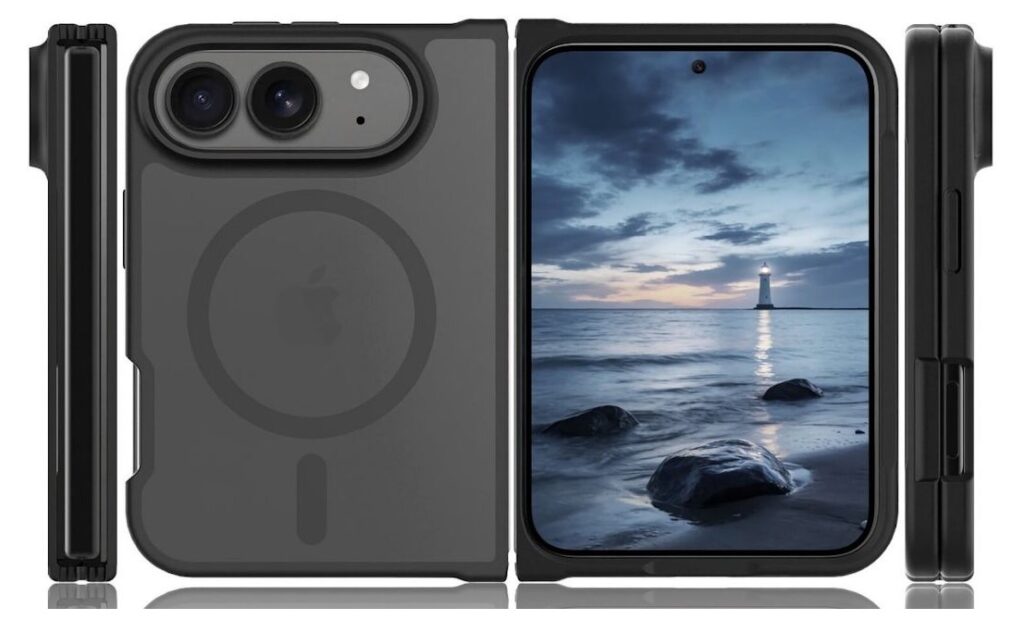
The most important takeaway from the Apple iPhone Fold Case Design Leaks is not the cameras. It is the display ratio.
Most foldables force compromises. Users get either:
- A narrow outer screen
- An awkward tablet aspect ratio
- Poor app optimization
Apple’s broader chassis changes all three.
The design appears optimized for what industry insiders call “transition continuity.” This means users can move between folded and unfolded modes without feeling like they’re switching devices entirely.
That single detail could define the iPhone Fold experience.
Why Aspect Ratio Matters More Than Screen Size
iPhone Fold: Consumers often focus on display size numbers. Real usability depends more on the aspect ratio.
A wider foldable display improves:
- Web browsing
- Spreadsheet editing
- Reading comfort
- Gaming controls
- Multitasking layouts
Apple likely studied years of feedback from Samsung and Google on foldables before finalizing this direction.
Instead of chasing headline specifications, Apple seems focused on friction reduction.
That approach matches Apple’s historical product strategy.
MagSafe Support Could Become a Major Selling Point
One subtle detail from the leaked iPhone Fold cases generated major industry discussion.
Visible MagSafe alignment rings appear inside the accessory renders.
That matters because earlier prototype leaks created uncertainty around Apple’s wireless charging plans for the foldable device.
If MagSafe remains intact, Apple gains an ecosystem advantage competitors still struggle to match.
Users would immediately gain compatibility with:
- MagSafe wallets
- Charging stands
- Battery packs
- Car mounts
- Existing accessories
This reduces adoption friction for current iPhone owners.
Samsung spent years building foldable hardware. Apple may skip part of that Learning curve by leveraging ecosystem integration from day one.
Apple’s Hinge Design Could Be the Real Innovation
The iPhone Fold display gets attention. The hinge determines success.
Reports suggest Apple plans to use liquid-metal components in the hinge assembly. This material offers stronger structural durability while reducing mechanical fatigue.
That directly addresses the biggest reliability concern surrounding foldable devices.
Current foldables often face criticism for:
- Creasing
- Dust vulnerability
- Long-term hinge wear
- Display stress points
Apple reportedly aims for a nearly crease-free display experience. If successful, that alone could reshape consumer trust in foldable phones.
The “Invisible Fold” Framework
Apple appears to follow what hardware engineers describe as the Invisible Fold Framework.
The concept focuses on making the fold disappear psychologically rather than physically.
Three elements support this strategy:
1. Wider usability in folded mode
Users rely less on unfolding constantly.
2. Minimal crease visibility
The display interruption feels less distracting.
3. Seamless software continuity
Apps transition naturally between modes.
This approach prioritizes behavior design instead of hardware spectacle.
That is classic Apple thinking.
Button Placement Reveals Apple Is Reworking Internal Architecture
The leaked iPhone Fold case renders also show unusual button placement.
The volume controls appear positioned higher than expected, while the power and Camera Control buttons remain on the right side.
This likely reflects internal engineering constraints created by:
- The hinge system
- Battery segmentation
- Speaker placement
- Thermal architecture
The bottom edge reportedly includes:
- USB-C connectivity
- Quad-speaker configuration
That audio setup suggests Apple wants the foldable device to function as a serious media consumption platform, not only a smartphone.
Why Apple Waited So Long to Enter Foldables
Many consumers assume Apple arrived late to the foldable market because it lacked innovation speed.
The opposite explanation is more likely.
Apple historically avoids first-generation hardware categories until supply chains, durability, and software ecosystems mature.
The company followed this pattern with:
- Smartwatches
- Tablets
- Wireless earbuds
- Mixed reality hardware
Foldables still face durability skepticism. Apple appears determined to solve the category’s trust problem before launch.
That strategy often frustrates early adopters. Historically, it also works.
Expected Launch Timeline and Specifications
Current reports point toward a September 2026 unveiling.
Rumored specifications include:
- 7.6-inch internal display
- 5.49-inch external display
- Dual rear cameras
- USB-C support
- MagSafe compatibility
- Liquid metal hinge components
- Apple A20 Pro chipset
Apple has not confirmed any details publicly.
Still, the consistency between multiple leaks increases confidence surrounding the overall design direction.
Final Thoughts
The latest Apple iPhone Fold Case Design Leaks reveal more than accessory dimensions. They reveal Apple’s broader foldable strategy.
Instead of chasing extreme hardware specifications, Apple appears focused on usability, ecosystem continuity, and long-term reliability. The wider display format alone signals a different philosophy from existing foldable competitors.
If these leaks prove accurate, the iPhone Fold could become the first foldable device designed for mainstream users instead of early adopters.
Want more deep analysis on Apple hardware leaks, AI devices, and next-generation consumer tech? Subscribe to our newsletter and join the discussion in the comments below.