
It was expected that Nintendo fans would be hyped about Pokémon Winds and Waves. Even before the Nintendo Switch 2 had gone into full global release, few people could have been surprised at the price tag.
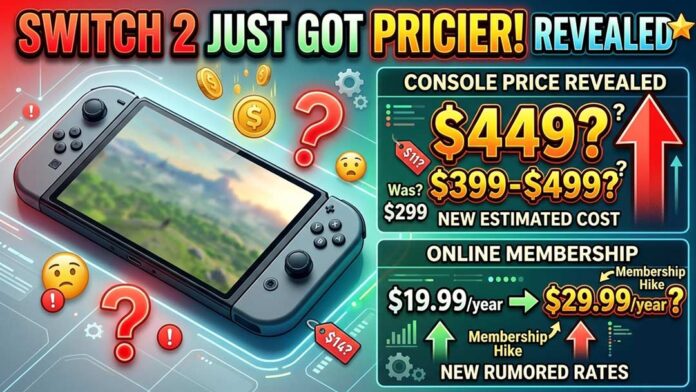
Nintendo announced the hefty price increase for the Nintendo Switch 2 in the United States, Canada, Europe, Japan, and South Korea. The company also hiked Nintendo Switch Online membership fees, making gaming even more expensive.
For many players, the Switch 2’s look is no longer an issue. The core question now is whether Nintendo is truly testing the boundaries of customer loyalty with rising prices.
Table of Contents
Nintendo Switch 2 Prices Are Rising Worldwide
The rise was due to changing economic conditions and market pressures, Nintendo said. The new prices will take effect May 25, 2026, in the East (Japan and South Korea), and September 1, 2026, in the West.
The United States price climbs from $449.99 to $499.99. Canada moves from $629.99 to $679.99. Europe increases from €469.99 to €499.99.
Some of the biggest increases are in Japan. The Japanese-language Nintendo Switch 2 system price has been raised by ¥10,000 to ¥59,980. The OLED versions of Switch and Switch Lite also received a significant price increase.
It wasn’t only Nintendo putting the focus on hardware, though. Nintendo Switch Online subscriptions also saw price increases at several tiers.
Why Nintendo Raised Prices Before Launch Momentum Peaks
Most companies avoid raising prices near the beginning of a console generation. Nintendo moved in the opposite direction.
At first glance, the decision is risky, but Nintendo likely believes that strong demand will offset any consumer frustration. This belief is central to their pricing approach.
Pokémon Winds and Waves plays a major role in this strategy. Historically, major Pokémon releases drive massive hardware adoption. Nintendo understands that anticipation around Generation 10 creates leverage that few competitors possess.
This leads to a counterintuitive reality that many gamers overlook.
Nintendo is not aiming to win over every gamer with this price hike. The objective is to secure enough dedicated buyers to drive demand and maintain scarcity.
That distinction matters.
Scarcity tends to increase perceived value in the gaming hardware market. Sony capitalized on this during PlayStation 5 shortages, and now Nintendo appears ready to use the same psychology with the Switch 2.
The Real Cost Goes Beyond the Console
The Nintendo Switch 2 Price Hike becomes even more significant once online memberships are factored in.
A growing number of gamers focus only on hardware pricing while ignoring recurring ecosystem costs. That approach misses the bigger financial picture.
Nintendo Switch Online individual memberships in Japan now cost ¥3,000 annually, up from ¥2,400. Family memberships jumped to ¥5,800. Expansion Pack subscriptions also increased across both individual and family plans.
Over several years, subscription costs quietly add hundreds of dollars to the total cost of ownership.
This reflects a broader industry trend.
Gaming companies no longer depend solely on console sales. Recurring subscriptions, digital storefront purchases, and ecosystem retention drive modern revenue models.
Nintendo spent years appearing resistant to aggressive monetization strategies. The recent pricing changes suggest that the era is ending.
Nintendo’s Sales Forecast Reveals Something Interesting
Nintendo projects 16.5 million Switch 2 sales before March 31, 2027.
That number sounds massive. Yet the figure falls below the company’s earlier benchmark of 19.86 million units.
This detail reveals an important insight.
Nintendo likely expects some consumer resistance after the Nintendo Switch 2 Price Hike. Otherwise, the company would project stronger growth during a fresh hardware cycle paired with a major Pokémon release window.
Nintendo is prioritizing higher revenue per customer over maximizing unit sales. This shift reflects a strategic change in the company’s market approach.
That shift mirrors broader changes across the gaming industry. Xbox is restructuring Game Pass strategies. Sony recently raised PlayStation Plus prices. Industry publishers prioritize long-term monetization over hardware expansion.ion.
The affordable console generation is fading fast.
Given all the shifts in pricing and strategy, many are now asking: Should gamers buy the Nintendo Switch 2 now or wait?
The answer depends on what kind of gamer you are and how soon you want to play the latest titles.
Players who already plan to buy Pokémon Winds and Waves near launch likely gain little from waiting. Nintendo rarely cuts prices early in a console lifecycle, especially when demand remains high.
If you are a casual gamer, waiting may be a better option. Over the next two years, expect possible hardware bundles, revised editions, or improved online stability as the console matures.
There is another factor many buyers ignore.
A higher launch price raises expectations for performance, online features, and the quality of first-party software. Nintendo faces increased pressure to justify the premium—something previous Switch generations avoided.
Gamers will tolerate expensive hardware only if the experience feels worth the investment.
The Nintendo Switch 2 Era Looks Different Already
Nintendo built the original Switch era around accessibility and broad appeal. The Nintendo Switch 2 strategy feels more aggressive, more premium, and more financially calculated.
The company clearly believes its intellectual property portfolio remains strong enough to withstand backlash. Pokémon, Zelda, Mario, and Smash Bros continue operating at a scale few entertainment brands can match.
Still, loyalty has limits.
If Nintendo continues increasing hardware and subscription costs while competitors reshape pricing structures, gamers will become far more selective about where they spend money.
The next year will determine whether Nintendo strengthened its market position or pushed pricing too far.
What do you think about the Nintendo Switch 2 Price Hike? Share your opinion in the comments and subscribe for more gaming industry breakdowns, pricing analysis, and next-generation console coverage.