

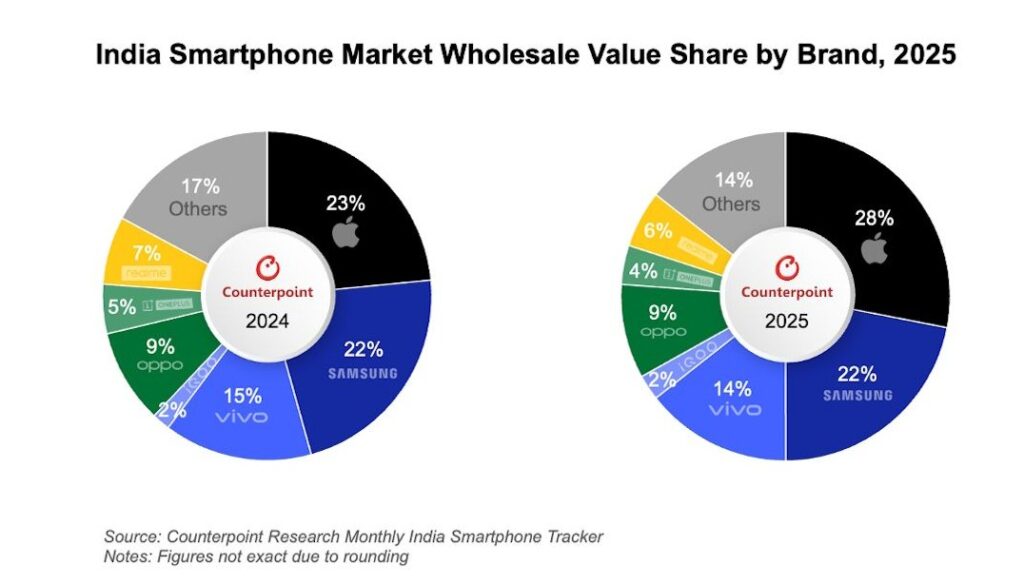
India’s smartphone market showed solid strength in 2025. The market value grew by 8% year on year, even as overall shipment volumes stayed mostly flat. This growth shows that buyers are spending more per phone and moving toward higher-feature models.
Fresh data from Counterpoint Research explains how brand strategy, pricing, and changing buyer habits shaped the year.
Table of Contents
Nothing and CMF see record growth
Fresh off a wave of interest, Nothing, along with its spin-off label CMF, made waves across India. Buyers there showed clear enthusiasm, pulling both names into fast-selling territory. Growth surged, fueled by choices that clicked without flash.
A single brand closed out 12 months surging 32% compared to the prior year, claiming the top spot for growth speed among phone makers during late 2025. Steady appetite continued whether shopping online or in storefronts, thanks to factories running closer to home and more shops carrying units.
CMF Rises Quickly Among Brands
That one stood out more than any other that year. 83% up compared to twelve months earlier, CMF pushed forward through 2025. 59% surged in just the final three months. Right there, it led all others racing ahead in India’s phone market.
The brand’s local production drive and its tie-up with Optiemus fueled this growth. Thanks to homegrown assembly, CMF accelerated deliveries, kept prices steady, and won favour among shoppers in India.
CMF Phone 2 Pro sees rising demand
In April 2025, the CMF Phone 2 Pro arrived, stirring things up right away. It looks mixed well with solid functions, yet stayed within reach price-wise – this struck a chord. Young customers noticed, drawn by how it stood apart without shouting about it.
Meanwhile, Nothing expanded its physical footprint while advancing local manufacturing goals in India. A new milestone looms – a debut storefront set to launch in Bengaluru – showing clear intent to stay rooted in the region.
Vivo Leads in Market Share
Amid the thick of change, Vivo still held the top spot in sales. With every newcomer pushing harder, it finished 2025 at 20% – iQOO was left out of that count.
One step at a time, Vivo stuck to a plan split in two. Sales climbed fast thanks to the Y and T lines working together. At the same time, the X range lifted how people saw the brand. Growth jumped up 185% compared to last year, for that top-tier model. A big reason? Buyers really wanted the new Vivo X200 FE.
Premium Phones Attract More Customers
Last year saw a clear tilt toward high-end mobile devices. Over one in five handsets purchased across India cost more than usual. What stood out was how quickly people upgraded their choices.
Demand stayed steady through the year, while inflation held near targets. That mix gave companies room to adjust pricing without pressure on margins. A reduced repo rate created extra space for flexible deals around 30,000 rupees. Shoppers responded by choosing more models in that bracket during checkout moments. Sales volume climbed sharply within months after those changes took effect. One out of every five shipped units now falls into this specific range. Eleven percentage points higher than what was seen just twelve months earlier. Movement like this hasn’t happened since before the last policy shift cycle began.
Financing options influence how people buy
Budgets shifted because payments became easier to manage. Since instalments broke down costs into smaller chunks, shoppers often opted for high-end devices rather than settling for cheaper ones.
Fueled by rising demand for premium models, prices climbed across the board, lifting the total market value despite minimal gains in units sold.
Q4 2025 shows a brief slowdown
The fourth quarter of 2025 saw things ease a bit. Shipments fell 4% year over year as demand dipped after festivals, while memory prices climbed.
One reason phones cost more now? Memory chips got pricier over the past year. Demand jumped because gadgets require more power for built-in artificial intelligence. Bigger memory setups also pushed overall costs higher. That shift showed right through in what people pay at checkout.
MediaTek tops the chipset market
MediaTek grabbed first place among chipmakers by 2025, holding nearly half the market. Right behind was Qualcomm, accounting for close to three out of every ten units sold.
Finding its footing in devices that aren’t top-shelf yet pack a punch, MediaTek rose as demand swelled. Growth didn’t come from flagship frenzy but steady movement in the middle lanes – right where buyers multiplied.
Market Outlook 2026
A bumpier road looms into 2026, forecasts suggest. Shipments could slide by just under 10% because factories face steeper bills for parts and output. While margins tighten, pressure builds behind the scenes across supply chains.
Phones might stay in pockets longer when tags climb. Squeezed tightest? That chunk under fifteen thousand rupees – every extra buck weighs heavily there.
Final Thoughts
One thing stood out about India’s smartphone scene in 2025 – maturity became obvious. Spending climbed, yet it wasn’t just about price; what mattered shifted, too. Value took centre stage as customers began looking beyond labels. High-end models found more takers, even as overall expansion begins to ease. What changed last year might hint at where things head next. The way people buy – and sell – phones transformed quietly beneath the surface.