

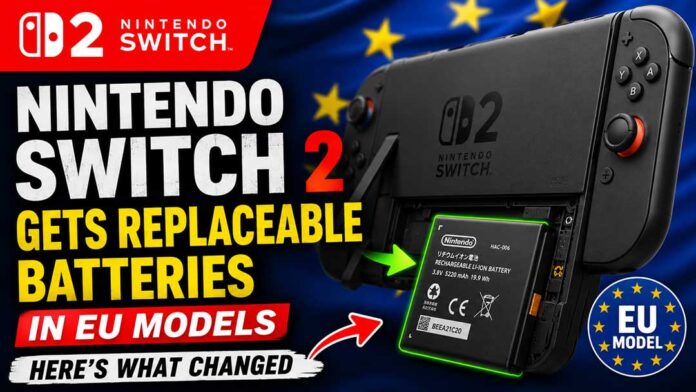
Right away, gamers notice clear perks they can actually use. What matters shows up fast- no waiting around.
Each rechargeable gadget wears out its power cell. Daily use of portable consoles leads to a faster, shrinking playtime bit by bit. A swappable battery lets users refresh the function without tossing out the whole unit.
Years pass, yet many players still hold on to their Nintendo gear. Ownership stretches on, sometimes outliving entire console eras. Functionality stays strong when parts can be swapped. Imagine grabbing a Nintendo Switch 2 now – its lifespan grows if the battery swaps out later. Future use? Less worry about wear over time.
Fixing things gets cheaper this way. Rather than mailing gear off or covering pricey repairs, people handle upkeep themselves – keeping devices longer without relying on experts.
Table of Contents
The Unexpected Outcome: Nintendo Gains More Than Gamers
Nintendo Switch 2: Surprisingly, swappable batteries might look like just another rule forced on companies. Still, they offer real benefits for Nintendo too.
Hardware firms usually chase fresh gadget sales. Yet Nintendo pulls in high income from games, memberships, and online purchases. Making consoles last longer could mean fans stick around inside Nintendo’s world a bit more.
Eight extra years with a Nintendo Switch 2 means more game buys, downloads, and service fees over time. That stretch might raise each user’s overall value. Instead of shortening value, staying with one system longer could actually build it up.
Oddly enough, rules set by authorities might align better with company goals than most people think. Compliance isn’t always at odds with profit – sometimes it quietly supports it.
Do the new models appear different?
Nintendo Switch 2: Still unclear how the battery swap works inside Nintendo’s latest design. Engineering specifics remain under wraps by the company. No official details have surfaced yet on that front.
Right now, it looks like the main way people play on the Nintendo Switch 2 won’t shift much. Even though new hardware often brings changes, this time things might feel familiar. Power output probably won’t jump by much. The screen type is likely to stay just as it is today. How do you hold and press buttons? That part seems set to be the same too. Older games should still work without any hiccups. While upgrades happen, some pieces clearly aren’t being rethought.
Inside, things might shift a bit – packaging labels could carry fresh marks too. When Nintendo finally releases the updated versions, shoppers across Europe may spot different model names on shelves instead.
Nintendo Switch 2 price might go up?
Folks who study factory numbers have pointed out price tags piling up. Production expenses are what’s catching their eye lately.
Openings for swapping batteries mean extra design steps. Built-in toughness needs to stay strong, even when access gets simpler. Complexity grows because of these built-in demands.
One thing stays clear: Company hasn’t said anything about new Nintendo Switch 2 prices. Yet running distinct models across regions might add strain on production and shipping logistics.
Still unclear if shoppers will feel the financial impact. Costs could stay within Nintendo’s walls – or show up later in price tags down the road.
(Also See: Do NOT Buy a Used Switch 2 – Nintendo’s Brutal Anti-Piracy Crackdown Explained)
Are other regions getting replaceable battery models?
Right now, just Europe’s getting the update – Nintendo hasn’t said anything about the rest of the world yet.
Across North America and parts of Asia, no official word has arrived about updated console models. One thing hangs in the air – could Nintendo unify the look everywhere down the line?
A worldwide launch has its clear strengths. One type of hardware can make building and shipping a single device easier than many. Should buyers in Europe react well, Nintendo might conclude that swap-out batteries serve them better over time.
Right now, there’s no clear sign from the company that this step will happen. Yet.
Future of Gaming Hardware: What This Means
Nowhere is the push for longer power life more clear than in gaming gear lately. A quiet change runs through how we use devices every day. This model’s upgrade hints at what users now expect without saying it. Power limits shape choices in ways makers can’t ignore. What you hold changes because of what drains too fast. Efficiency becomes normal when old flaws show up everywhere.
Years went by while makers chased slim shapes and shut-in parts. Now, though, voices rise – different ones now – who want things fixed, not replaced. A shift grows quietly: live longer, break less, stay useful much more than before.
What Nintendo did shows rules can push new tech designs. Even so, game machines might now follow the fix-it path already seen in phones and computers.
Should Europe’s launch go well, some makers might begin questioning old design choices for upcoming game consoles. A shift may quietly begin as hardware is reimagined differently than before.
Final Thoughts
Nintendo Switch 2 Happening now: future European versions of the Nintendo Switch 2 will include replaceable batteries. This shift isn’t just about one part getting easier to fix. People want gadgets that last longer; laws are shifting too, yet durability still surprises when it shows up. While companies once built things to be replaced, a different mindset creeps in – slowly.
Hardware that lasts longer, simpler repairs, better control – gamers gain obvious perks. Shifting gears like this lets Nintendo deepen player ties over time, even as rules around right-to-repair evolve.
Users should swap out batteries when they fade. Picture opening a console like flipping a switch – simple. What if every country sold a model built that way? Talk it through below, since how we fix gadgets might shape what comes next. Thoughts live where people type them, so toss yours into the mix.