
Apple’s smart glasses have stayed a rumor for years. Now the story finally comes with a real date attached – and a distinctly Apple reason for the wait.
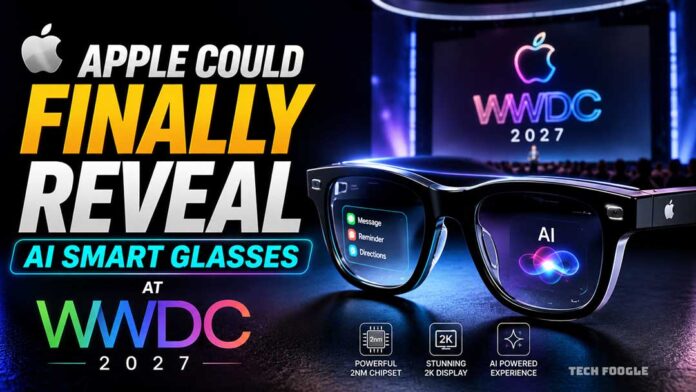
Bloomberg’s Mark Gurman reports that Apple now targets WWDC 2027, its June developer conference, for the first public look at the device. A retail launch would follow later that year. The timeline marks a shift from Apple’s earlier plan for a late-2026 reveal, and privacy, not flashy hardware, now drives the whole project.
Apple hasn’t confirmed an official name yet. Most coverage still calls the device “Apple Glasses,” so we’ll use that name here too, purely for convenience.
Table of Contents
Apple Smart Glasses The New Plan: Preview in 2027, Buy It Later
Gurman’s Power On newsletter says Apple wants developers to see the glasses about a year before anyone can actually buy them. That gap lets app makers build and test software before the hardware reaches store shelves.
The project reportedly carries the internal codename N50. It sits inside Brand’s Vision hardware group, the same team that built the Vision Pro headset. Analyst Ming-Chi Kuo separately projects mass production around the second quarter of 2027 and expects 3 to 5 million units in the first year alone. Two analysts landing near the same window is a decent sign this date isn’t just a guess.
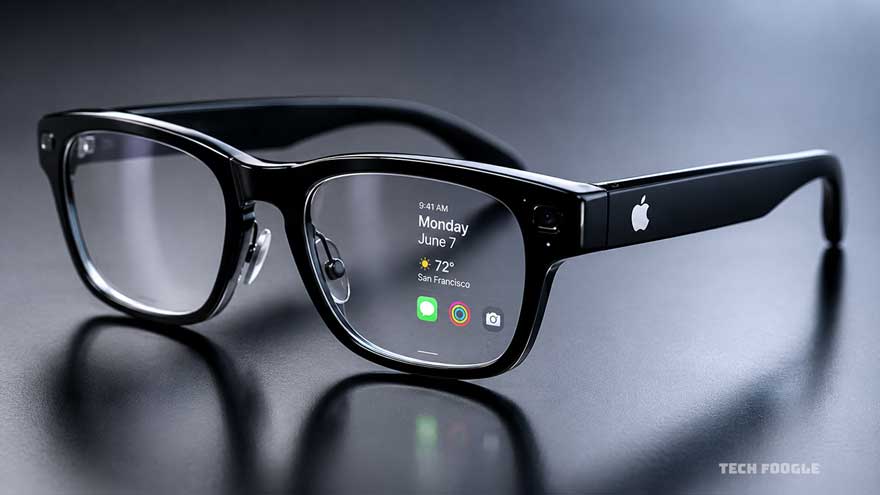
Apple hasn’t announced pricing, but multiple reports point to a range of roughly $200 to $500. Rumored design details include oval camera housings, several frame styles, and a handful of colors, clearly aimed at people who already wear glasses or sunglasses daily, not just early adopters.
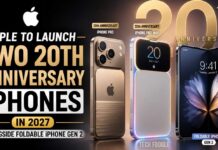
The glasses also land in the middle of a stacked year for Company. Reports on Brand’s 2027 lineup point to a 20th-anniversary iPhone and the company’s first foldable iPhone arriving around the same stretch, which makes the glasses one piece of a much bigger product wave rather than a standalone bet.
No Screen Here – Siri Does the Talking
Here’s the twist: this isn’t a shrunken Vision Pro. Reports consistently describe a first-generation device with no built-in screen and no augmented-reality overlay. Instead of showing you things, it talks to you.
That puts an upgraded, more conversational Siri at the center of the experience, handling calls, music, directions, and quick questions about whatever sits in front of you. It’s a “less is more” approach, and a sensible one — nobody really wants a tiny screen fogging up their view just to find the nearest coffee shop.
An in-lens display isn’t gone forever. Gurman says Apple still sees a path toward true AR glasses eventually. Still, he calls that a multi-year project, not something WWDC 2027 will include.
Expect the basics to work well: hands-free phone calls, music without pulling out AirPods, walking directions, and quick translations. Photo and video capture is trickier. Those capabilities depend entirely on which privacy design Apple ultimately locks in, so it’s fair to treat that particular feature as unconfirmed for now.
Privacy Is the Real Headline
One word ties this whole project together: privacy. Camera glasses carry a trust problem, and Apple knows it well.
The core issue is simple. Bystanders often can’t tell when smart glasses are recording them. Meta has run straight into this problem with its Ray-Ban glasses.
A class-action lawsuit filed in March 2026 accused Meta of marketing the glasses as privacy-friendly while an overseas contractor reportedly reviewed some of the footage. Weeks later, separate reports described people paying strangers to physically turn off the recording light on their Ray-Bans, which pushed Meta to ship a software update that cuts camera access the moment someone tampers with that light.
Company can’t afford a repeat of that headline. So the company is reportedly testing several directions at once. One version drops cameras completely. Another keeps outward-facing sensors but blocks normal photo and video capture, using those sensors only to help the AI recognize objects and places.
Gurman, though, points to a simpler likely outcome: real cameras that pair with the privacy habits Apple already leans on elsewhere – visible indicators, on-device processing, and tighter permission controls.
This isn’t a new idea for Apple. It closely echoes Visual Intelligence, the feature already running on recent iPhones that identifies objects and text through the camera. Apple is also reportedly testing camera-equipped AirPods that follow the same logic: small sensors that feed Siri visual context, not a hidden camcorder sitting in your ear.
Apple Isn’t the Only One Chasing This Market
Smart glasses stopped being a novelty a while back. Meta has sold millions of Ray-Ban smart glasses since 2023, and Counterpoint Research puts its global market share at roughly 84% in early 2026. IDC projects worldwide shipments will grow from about 13.6 million units this year to roughly 27.3 million by 2030.
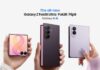
Samsung just entered the race too. The company unveiled its Galaxy Glasses in July 2026. Design partners Gentle Monster and Warby Parker handled the frames, Qualcomm’s Snapdragon AR1 Gen 1 chip runs the hardware, and Google’s Gemini handles the AI side – again with no built-in display.
Brand’s real pitch isn’t a spec sheet. It’s trust. If Apple convinces buyers its glasses are the safer choice, that message alone could matter more than an extra camera megapixel or another hour of battery life.
The size of the prize explains Brand’s patience here. Roughly 2.2 billion people worldwide need some form of vision correction, and the global eyewear industry generates an estimated $200 billion a year. One widely cited estimate puts Apple Watch revenue at around $17 billion annually – and even a modest slice of the eyewear market could beat that figure without much trouble.
Why Preview Something You Can’t Buy Yet
Showing off hardware a year before launch sounds unusual, but it fits how software-heavy this category has become. An AI-first wearable needs serious lead time before it’s ready for a store shelf.
A WWDC reveal gives developers a real head start: building apps, testing how Siri handles outside requests, and figuring out what a genuinely useful “smart glasses app” even looks like. By the time regular buyers pick up a pair, the software side should feel far more finished than a typical version-one product.
So, When Can You Actually Buy a Pair?
Short answer: not soon. WWDC 2027 lands in June, and Apple appears to be targeting a retail launch later that same year. Some reports go further, suggesting wide availability might not arrive until early 2028, echoing how the original Vision Pro expanded market by market instead of launching everywhere at once.
Company hasn’t confirmed specs, battery life, or a final feature list, and none of this is official yet. The timeline has already slid once, from late 2026 to late 2027, so treat any date here as a moving target rather than a promise carved in stone.
The Bottom Line
Apple’s smart glasses look less like a flashy AR gadget and more like a genuinely useful AI companion you forget you’re wearing. That’s a smaller ambition than a full headset, but arguably the smarter bet for a first attempt.
Whether Apple can turn “we take privacy seriously” into an actual reason to buy the product, rather than just a slogan on a keynote slide, is the real question heading into WWDC 2027.
Is Apple late to the smart glasses market?
A little. Meta has sold glasses since 2023, and Samsung launched its own model in 2026. Apple isn’t first, but its existing customer base and its reputation for privacy could matter more to everyday buyers than simply arriving early.